Overbite vs Underbite vs Open Bite: Which Needs Treatment?
Your teeth do more than create your smile. They help you bite, chew, speak and keep your jaw functioning comfortably. Ideally, the upper and lower teeth should meet in a balanced way. But when they do not, the way your teeth come together can affect both function and appearance.
This is where bite correction becomes important. A bite that does not align properly is known as a malocclusion and it can take several forms. The three commonly discussed concerns are overbite, underbite, open bite, each of which affects the way your teeth meet differently.
If you have ever wondered whether your bite is normal, searched for overbite, underbite, open bite or noticed that your teeth do not meet comfortably when you close your mouth, understanding the difference is a useful first step.
What Is a Normal Bite?
A normal bite does not mean that every tooth has to meet perfectly edge-to-edge. In a healthy bite, the upper teeth usually sit slightly in front of the lower teeth, while the teeth fit together in a way that allows comfortable chewing and speaking.
The jaws, teeth and surrounding muscles all work together. When this relationship is significantly altered, it can create one of several malocclusion types.
Some bite differences are primarily related to tooth position, while others may involve jaw growth or skeletal structure. This distinction matters because treatment needs to address the actual cause rather than simply moving teeth into a different position.
An orthodontic assessment can determine whether bite correction is necessary and what type of treatment would be appropriate.
Overbite: When the Upper Teeth Overlap Too Much
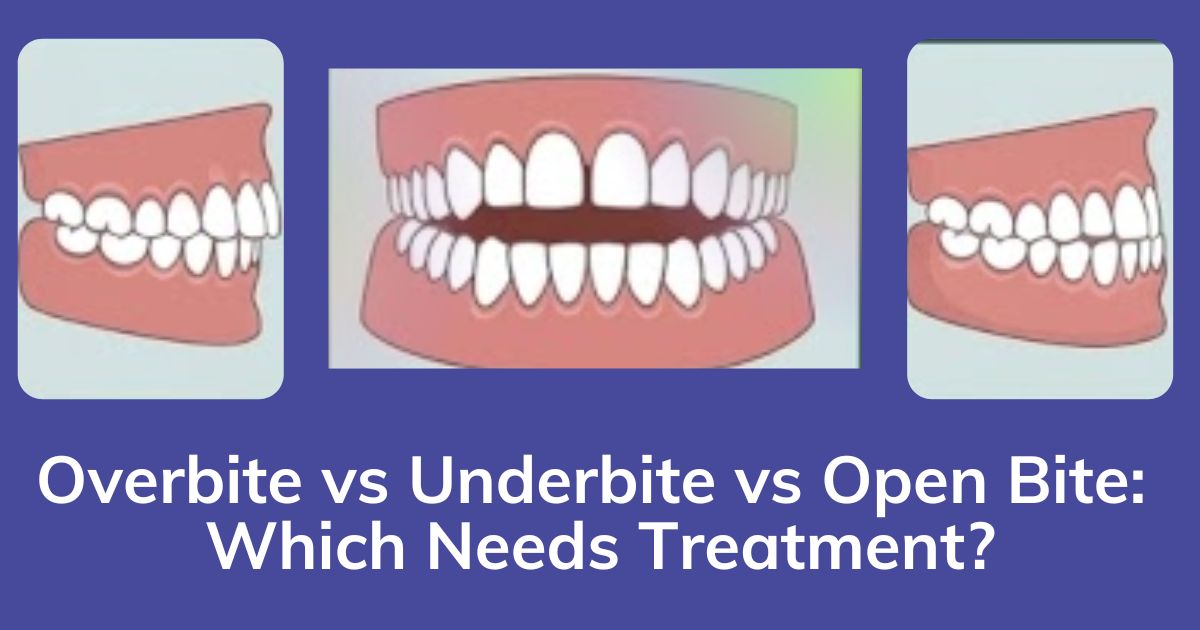
An overbite occurs when the upper front teeth overlap the lower front teeth more than expected. A small amount of vertical overlap is normal, but a deeper overlap can become a concern.
The appearance may be noticeable when smiling, but the more important question is whether the excessive overlap affects function or oral health. In some cases, a deep overbite can cause the lower teeth to contact the gums or palate behind the upper teeth. It may also contribute to excessive tooth wear.
The causes can vary. Tooth position, jaw development, genetics and certain childhood habits may all play a role. This is why overbite orthodontics is not a one-size-fits-all process.
Depending on the individual case, treatment may involve braces, clear aligners or other orthodontic approaches. The objective is not simply to make the front teeth look straighter, but to establish a healthier and more functional relationship between the upper and lower teeth.
Underbite: When the Lower Teeth Sit Further Forward
An underbite is essentially the opposite relationship. The lower front teeth sit in front of the upper front teeth when the mouth is closed.
While a mild underbite may not create significant problems, a more pronounced one can affect chewing, speech and facial balance. It may also place additional stress on certain teeth and the jaw.
Underbites can be caused by tooth position, jaw growth or a combination of both. In growing children and teenagers, early assessment can sometimes be particularly valuable because jaw development is still taking place.
For adults, treatment planning depends heavily on whether the concern is primarily dental or skeletal. This is one reason why proper diagnosis is central to bite correction. Simply looking at the teeth is not always enough to understand what is happening underneath.
Open Bite: When the Teeth Do Not Meet
An open bite occurs when certain upper and lower teeth do not touch when the mouth is closed. It is most commonly noticed towards the front of the mouth, although open bites can also occur towards the back.
A person with an open bite may find it difficult to bite into certain foods using their front teeth. In some cases, speech can also be affected.
An open bite may be associated with genetics, jaw development or habits such as prolonged thumb sucking or tongue thrusting during childhood. In adults, the underlying cause needs to be carefully assessed before deciding on treatment.
Because there are different malocclusion types, an open bite should not automatically be treated in the same way as an overbite or underbite. The treatment approach needs to reflect what is causing the teeth not to meet.
Overbite, Underbite, Open Bite: Which Is More Serious?
There is no simple ranking of which one is ‘worst’. The severity of a bite problem depends on the individual.
A mild overbite may cause no problems at all, while a significant one could contribute to tooth wear or trauma. Similarly, a small open bite may be mainly cosmetic, whereas a larger one could interfere with chewing.
An underbite can range from a minor tooth-position issue to a more complex jaw relationship. In these situations, bite correction may require more comprehensive planning.
The important question is not simply, ‘which bite do I have?’, it is, ‘is my bite affecting my teeth, function, comfort or long-term oral health?’
When Does a Bite Actually Need Treatment?
Overbite, underbite, open bite and other bite differences do not always require immediate treatment. Orthodontists generally look at several factors before recommending intervention.
These include how the teeth meet, whether there is crowding or spacing, the condition of the gums and teeth, jaw relationships, tooth wear and the patient’s symptoms or concerns.
Treatment may be worth considering when a bite makes chewing difficult, causes repeated trauma, contributes to excessive wear or creates difficulty maintaining oral hygiene. Significant aesthetic concerns can also be a legitimate reason for treatment, provided the teeth and supporting structures are healthy.
For children, kids dentistry and orthodontic assessments can sometimes identify developing bite concerns early. However, early assessment does not always mean immediate treatment. Sometimes monitoring growth is the most appropriate approach.
How Is Bite Correction Done?
The treatment used for bite correction depends on the type and severity of the problem. Braces remain a reliable option for moving teeth and controlling their position. Clear aligners can also be suitable for many orthodontic cases, although they are not appropriate for every bite problem.
For some patients, particularly those with significant jaw discrepancies, orthodontic treatment alone may not provide the required correction. In such cases, the treatment plan may need to be more comprehensive.
This is why an orthodontist should assess the complete relationship between the teeth and jaws before recommending a specific appliance. Treatment should be based on diagnosis rather than simply choosing the most discreet or popular option.
Why Diagnosis Matters More Than the Label
It can be tempting to search online for overbite, underbite, open bite and compare your teeth with photographs. However, two people can appear to have the same type of bite while having completely different underlying causes.
For example, one person’s overbite may be caused mainly by the position of the front teeth, while another person’s may be related to the way their jaws have developed. This is also why overbite orthodontics requires individual planning. The same appliance or treatment sequence may not produce the same result for every patient.
A detailed examination allows the orthodontist to understand the bite in three dimensions and determine whether the concern is primarily dental, skeletal or a combination of both.
Can Bite Problems Affect Your Smile?
Yes, but appearance is only one part of the picture. A significant bite discrepancy can influence the visible position of the teeth and in some cases, the overall balance of the smile. This can affect how confident a person feels when speaking or smiling.
However, cosmetic improvement should not come at the expense of function. Cosmetic dentistry can address the appearance of individual teeth, but orthodontic treatment may be more appropriate when the underlying issue involves tooth position or bite.
Similarly, smile design can help plan aesthetic changes, but it should work alongside an understanding of the patient’s bite, tooth health and facial proportions.
This distinction becomes particularly important when someone is considering cosmetic procedures simply to disguise a bite problem. A porcelain veneer, for example, changes the appearance of a tooth but does not correct the underlying jaw relationship.
What Happens If a Bite Problem Is Left Untreated?
The answer depends on the type and severity of the problem. Some mild bite differences remain stable and never cause meaningful problems.
More significant cases, however, may contribute to uneven tooth wear, difficulty cleaning certain areas, gum irritation or repeated trauma. Some people may also develop discomfort associated with the way their teeth and jaws function.
That does not mean every untreated bite will become worse. It means that a proper assessment can help determine whether there is a genuine risk and whether treatment would offer meaningful benefits.
Good bite correction is therefore about more than straight teeth. It is about creating a relationship between the teeth that supports comfortable function and long-term oral health.
The Right Treatment Starts With the Right Diagnosis
If you have an overbite, underbite or open bite, the most useful next step is not to decide which treatment you want. It is to understand why your bite is the way it is.
An experienced orthodontist will assess your teeth, jaw relationship, facial structure, bite and overall oral health before recommending treatment. This approach is particularly important when malocclusion types overlap or when the visible problem does not reveal its underlying cause.
The goal of bite correction should be realistic and individualised. Sometimes treatment may be straightforward. In other cases, it may require a more detailed plan, particularly when jaw development or complex tooth movement is involved.
A Healthier Bite Begins With Understanding Your Smile
Your bite is something you use every day, often without thinking about it. When the teeth and jaws work together properly, eating, speaking and smiling can feel effortless. When they do not, even a problem that seems small can deserve closer attention.
Whether you have an overbite, underbite, open bite, etc. there is no single treatment that works for everyone. The right approach depends on the cause, severity and needs of your individual smile. Overbite orthodontics and other forms of bite correction should therefore begin with a proper assessment rather than assumptions based on appearance alone.
At Teeth & Braces by Dr Atul Jajoo, patients are assessed with both function and aesthetics in mind. With over 20 years of experience and a Master’s degree in Orthodontics and Dentofacial Orthopedics, Dr. Atul Jajoo brings specialist orthodontic expertise to the diagnosis and management of different bite concerns. His approach focuses on understanding the individual case before recommending a treatment pathway.
If you have been noticing an unusual bite, difficulty chewing or simply want to understand whether your teeth need correction, a professional assessment can give you clarity. Book a consultation with Dr Atul Jajoo to understand your bite, explore your treatment options and take the right step towards a healthier, more balanced smile.
FAQs:
Q1. What is the difference between an overbite and an underbite?
An overbite occurs when the upper front teeth overlap the lower teeth too much. An underbite occurs when the lower front teeth sit in front of the upper teeth. Both can vary significantly in severity and cause. An orthodontic assessment can determine whether treatment is needed.
Q2. Does an open bite always need treatment?
Not necessarily; a small open bite may not cause functional problems. Treatment may be recommended when it affects chewing, speech, appearance or oral health. The underlying cause also influences the decision. A professional assessment is the best way to determine whether bite correction would help.
Q3. Can clear aligners correct an overbite or underbite?
Clear aligners can correct certain bite problems when the case is suitable. However, they are not appropriate for every type or severity of malocclusion. The treatment method depends on tooth position, jaw relationship and the required movement. An orthodontist can determine whether aligners are suitable for your case.
Q4. At what age should bite problems be checked?
Bite concerns can be assessed during childhood, adolescence or adulthood. An early assessment can sometimes identify developing problems while the jaws are still growing. However, treatment is not always necessary immediately after an assessment. Adults can also undergo effective orthodontic treatment when their teeth and gums are healthy.



Leave a Comment