Smile Design: How Digital Smile Makeover Planning Works
A smile can influence much more than the way your teeth look in a photograph. The shape, position, proportion and visibility of your teeth all contribute to how your smile appears when you speak, laugh or simply relax. This is why modern cosmetic dentistry increasingly focuses on planning the smile as a whole rather than treating individual teeth in isolation.
This is where digital smile design comes in. Instead of relying entirely on traditional photographs, impressions and the dentist’s visual assessment, digital tools can help analyse the smile, plan potential changes and communicate the proposed outcome more clearly.
For someone considering a cosmetic transformation, this can make the process feel less uncertain. You can understand what your treatment is intended to achieve before deciding whether to proceed. But digital smile design is not simply about creating an attractive computer-generated image. It is a planning approach that combines facial aesthetics, dental proportions, function and the patient’s individual preferences.
What Is Digital Smile Design?
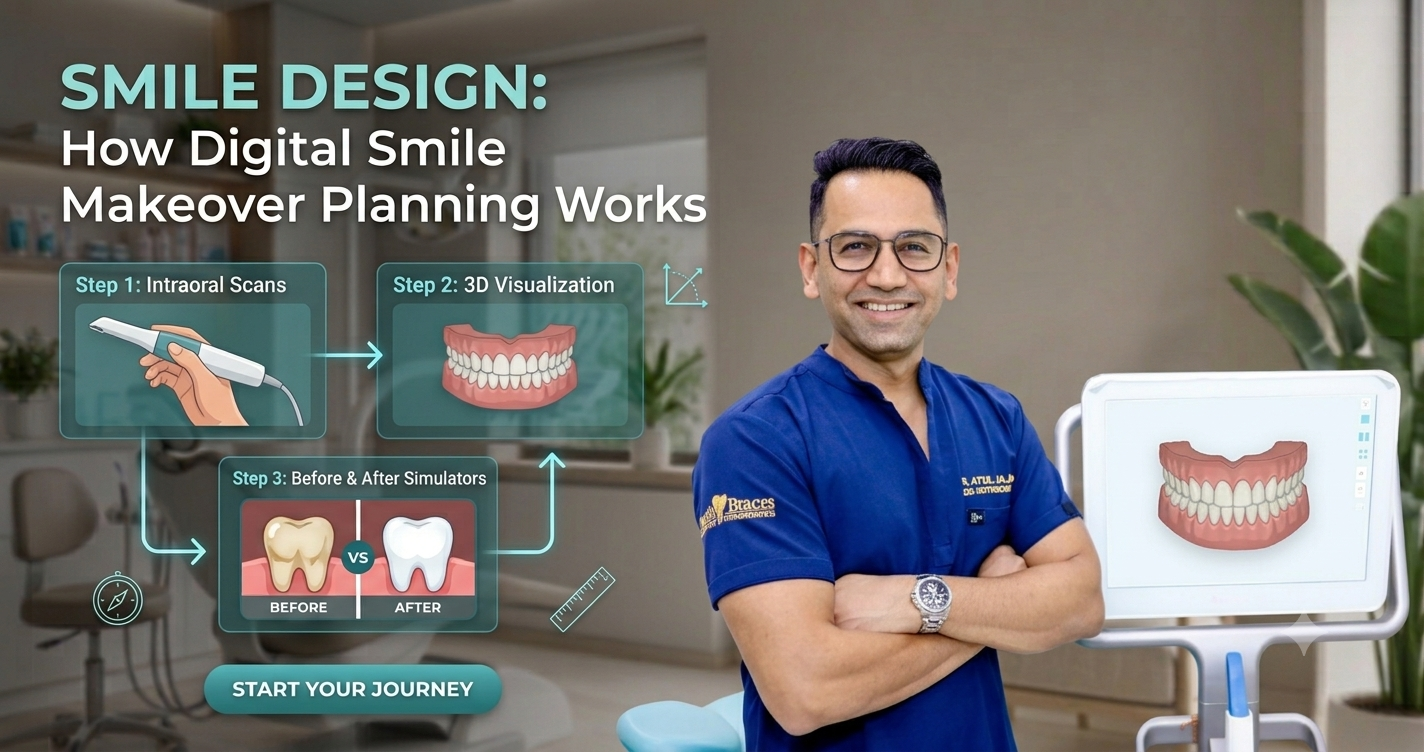
Digital smile design is a technology-assisted approach to analysing and planning changes to the appearance of a person’s smile. It uses digital photographs, scans and other clinical information to evaluate the relationship between the teeth, gums, lips and surrounding facial features.
Rather than looking at one tooth at a time, the dentist considers how the smile fits within the patient’s face. Factors such as tooth proportions, symmetry, gum display, smile line and the position of the lips can all be considered during the planning process.
This makes smile makeover planning more personalised. Two people may have similar concerns about chipped or uneven teeth but require completely different treatment plans because their facial proportions, bite and existing tooth structure are different.
The purpose of digital smile design is therefore not to promise a particular result but to create a clearer framework for discussing what may be achievable.
Why Does Smile Planning Need to Be Digital?
Traditional cosmetic treatment planning relies heavily on clinical examination, photographs and physical models. These remain valuable, but digital technology allows different pieces of information to be brought together more efficiently.
With digital smile design, photographs and digital scans can be used alongside other diagnostic information to create a more comprehensive view of the smile. This can help the dentist assess tooth dimensions, alignment and the relationship between the teeth and surrounding facial structures.
For patients, the biggest advantage is often communication. Instead of trying to imagine what a treatment plan might achieve from a verbal explanation alone, digital visualisation can make the proposed changes easier to understand.
That does not mean the digital preview is a guarantee of the final result. It is a planning and communication tool and the actual outcome depends on factors such as the condition of the teeth, treatment selected and biological response.
How Does Digital Smile Makeover Planning Work?
A digital smile makeover usually begins with a detailed assessment rather than immediately deciding which cosmetic procedure should be performed.
The dentist first discusses what you like or dislike about your current smile. You may be concerned about tooth shape, spacing, discolouration, uneven edges, excessive gum display or the overall appearance of your smile.
Photographs and digital scans can then be taken to document the existing condition. These records become an important part of smile makeover planning, because they allow the dentist to study the smile from different angles and consider how the teeth relate to the lips and face.
The information gathered can then be used to develop a proposed treatment concept. Depending on your needs, the plan may involve orthodontic treatment, tooth reshaping, whitening, bonding, veneers or a combination of approaches.
The important point is that the technology supports clinical decision-making rather than replacing it.
What Does a Digital Smile Makeover Actually Analyse?
A smile is made up of several elements that need to work together. Digital smile design allows these elements to be considered as part of one overall picture.
Tooth size and proportion are important because teeth that are too long, too short or disproportionate to one another can affect the appearance of the entire smile. The relationship between the upper front teeth and lower teeth may also be considered.
The gum line is another factor. Uneven gum levels or excessive gum visibility can influence the balance of a smile. Lip position and facial proportions are also relevant because teeth are viewed within the context of the face rather than independently.
This broader analysis can make teeth smile transformation more thoughtful. Instead of simply asking, “How can this tooth look better?”, the question becomes, “How can the smile work better as a whole?”
Can Digital Smile Design Help You Visualise the Result?
One of the most useful aspects of digital smile design is the ability to visualise proposed changes before treatment begins.
A digital simulation can provide an indication of how changes to tooth shape, proportion or position may influence the overall smile. This can be particularly useful when discussing a digital smile makeover, as patients often find it easier to respond to something they can see rather than a purely verbal description.
It also creates an opportunity for conversation. You can discuss what looks natural to you, what feels too dramatic and which aspects of your smile you would like to preserve.
However, it is important to understand that a digital simulation is not a photographic guarantee. It represents a proposed treatment concept based on available information. The final result can vary depending on the treatment, materials used and individual clinical factors.
What Treatments Can Be Part of a Smile Makeover?
There is no single procedure that defines a digital smile makeover. The treatment depends entirely on what needs to be changed and what is already healthy.
For someone with misaligned teeth, orthodontic treatment may be more appropriate than cosmetic reshaping. For another patient, professional whitening could address the primary concern. Bonding may help with minor chips or changes in tooth shape, while a porcelain veneer may be considered for selected aesthetic concerns where appropriate.
In some cases, several treatments may be combined. For example, orthodontic alignment could be completed before cosmetic refinement so that the final result is both functional and aesthetically balanced.
This is why smile makeover planning should begin with diagnosis and discussion rather than starting with a particular cosmetic treatment simply because it is popular.
Why Your Natural Smile Still Matters
A successful teeth smile transformation should not make every smile look identical. What looks natural and balanced for one person’s face may look completely different on another.
This is where individual preferences become important. Some patients prefer subtle changes that are difficult to identify, while others may want a more noticeable improvement.
During digital smile design, these preferences can become part of the conversation. The aim is not to erase the individuality of a smile but to understand what the patient wants while keeping the proposed treatment realistic and compatible with dental health.
A natural-looking result usually depends on proportion and harmony rather than simply making teeth as white or as straight as possible.
Is Digital Smile Design Only for Cosmetic Dentistry?
Although digital smile design is closely associated with cosmetic dentistry, its usefulness can extend beyond purely aesthetic treatment.
Orthodontic concerns, tooth position, bite relationships and existing dental work can all influence how a smile should be planned. If teeth need to be moved before cosmetic treatment, that should be recognised during the planning stage.
Similarly, replacing or restoring a damaged tooth should take the surrounding teeth and overall smile into account.
This broader approach makes smile makeover planning more comprehensive. Cosmetic considerations matter, but they should not be separated from oral health, function and long-term dental stability.
It is also important to distinguish this from kids dentistry, where treatment priorities are generally centred on developing teeth, oral health, growth and age-appropriate dental needs rather than cosmetic smile makeover planning.
What Happens After the Digital Plan?
Once the proposed Digital smile design has been discussed, the next step is deciding whether the suggested treatment is appropriate for you.
The dentist will explain the procedures involved, expected timelines, limitations, maintenance requirements and associated costs. Depending on the treatment, additional diagnostic records may also be required before treatment begins. This stage is important because seeing a digital simulation should not create pressure to proceed. It should give you more information to make an informed decision.
A good digital smile makeover is therefore not about rushing from a digital preview to treatment. It is about using better planning to create a clearer conversation between the patient and dental professional.
Can Digital Planning Make Your Treatment More Predictable?
Digital technology can improve the planning and communication process, but it cannot eliminate every variable involved in dental treatment.
Teeth respond biologically, materials have limitations and every patient’s oral health is different. The quality of the final result depends not only on the digital plan but also on the clinical diagnosis, treatment execution and ongoing maintenance.
That is why digital smile design works best when it is combined with sound clinical judgement. Technology can help show where you are starting, where you may be able to go and how different options could affect the smile, but an experienced dental professional still needs to determine whether the proposed treatment is appropriate.
This balance between technology and expertise is what makes teeth smile transformation more responsible and personalised.
A Better Smile Begins With Better Planning
A smile makeover should never be about following a trend or making every tooth look the same. The best results begin by understanding your existing smile, your dental health and what you actually want to change.
Digital smile design provides a modern way to bring these considerations together. By combining digital records, facial analysis and treatment planning, it can make smile makeover planning more visual, collaborative and personalised. Whether the final treatment involves orthodontics, bonding, whitening, veneers or another approach, the goal should remain the same: a healthy, functional smile that looks natural and suits you.
At Teeth & Braces by Dr. Atul Jajoo, treatment planning combines orthodontic expertise with a detailed understanding of smile aesthetics and individual patient needs. With extensive experience in orthodontics and cosmetic dental care, Dr. Atul Jajoo can assess whether a digital smile makeover is appropriate for your concerns and help you understand what treatment could realistically achieve.
If you are considering a teeth smile transformation and want to understand your options before committing to treatment, book a consultation with Dr. Atul Jajoo in Indore. A carefully planned smile starts with the right assessment and the right plan can make all the difference.
FAQs about Digital Smile Design
Q1. What is Digital Smile Design?
Digital Smile Design is a technology-assisted method of analysing and planning a patient’s smile. It uses digital photographs, scans and clinical information to help assess tooth proportions, facial harmony and possible treatment outcomes.
Q2. Is Digital Smile Design the same as cosmetic dentistry?
Not exactly. Digital Smile Design is a planning approach that can be used when considering cosmetic dentistry, orthodontics or combined treatment. It helps assess the smile before deciding which procedure, if any, is appropriate.
Q3. Can I see what my smile may look like before treatment?
Digital planning can provide a visual representation of a proposed result, which can make treatment discussions easier. However, the simulation is a guide rather than a guarantee of the exact final result.
Q4. Does everyone need a digital smile makeover?
No. A digital smile makeover is not necessary for every dental concern or every patient. Your dentist can determine whether digital planning would be useful based on your smile, oral health, treatment goals and the procedures being considered.



Leave a Comment