Can Invisalign Braces Fix Bite Problems in Kids?
A child’s smile is about more than straight teeth. The way the upper and lower teeth meet affects chewing, speech, jaw development and long-term oral health. If your child’s teeth appear crowded, the upper teeth overlap the lower teeth excessively, or the jaws do not seem to fit together comfortably, you may wonder whether Invisalign can help.
The answer is yes, in selected cases. Aligners for kids can correct certain bite problems, but their suitability depends on the child’s age, dental development and the complexity of the correction required. Some children may benefit from clear aligners, while others need traditional braces or appliances that guide jaw development.
Understanding the difference can help you make a more informed decision about your child’s orthodontic care.
What Are Common Bite Problems in Children?
A bite problem, also called malocclusion, occurs when the upper and lower teeth do not meet as they should. Some concerns are visible, while others become apparent only during a dental examination.
Common examples include:
- Overbite: The upper front teeth overlap the lower front teeth excessively.
- Underbite: The lower front teeth sit in front of the upper front teeth.
- Crossbite: Some upper teeth sit inside the lower teeth when the child bites down.
- Open bite: A gap remains between the upper and lower front teeth when the back teeth meet.
- Crowding: There is insufficient space for the teeth to align properly.
These conditions can develop due to genetics, differences in jaw growth, prolonged thumb-sucking or other oral habits. Not every irregularity requires immediate treatment, but some benefit from early assessment.
For parents exploring aligners for kids, the first consideration should be the underlying cause of the bite problem. Moving teeth into a straighter position does not always correct the relationship between the jaws.
Which Bite Problems Can Invisalign Correct?
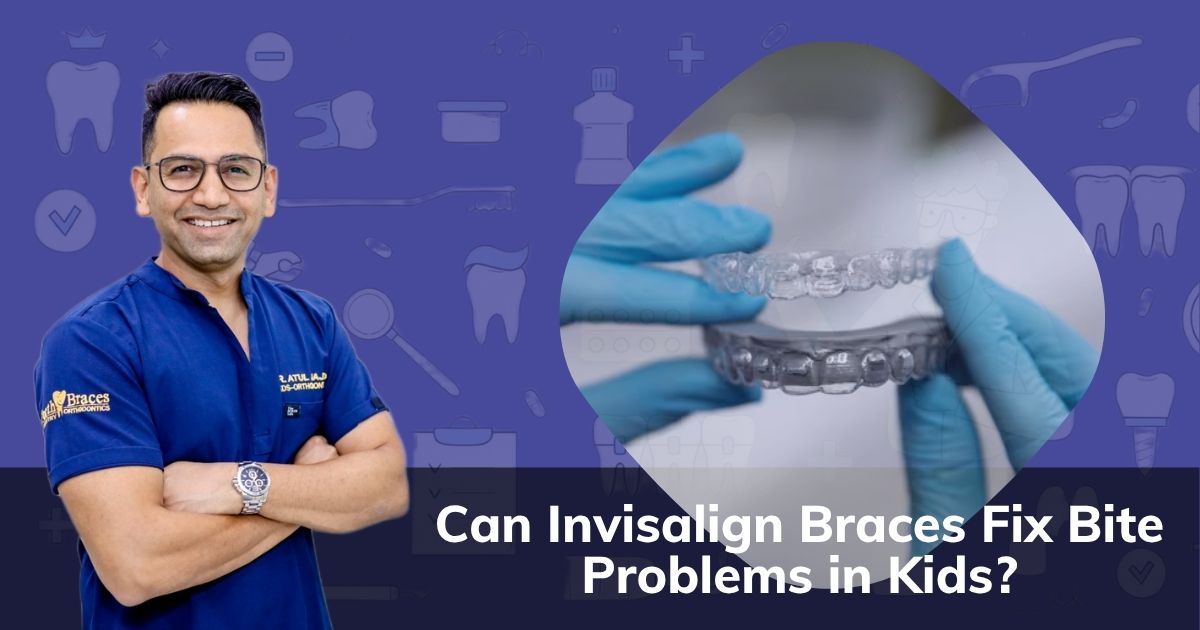
Invisalign uses a series of custom-made, transparent trays to move teeth gradually. For younger patients, Invisalign First is designed to accommodate developing smiles, including the stage when baby teeth and permanent teeth coexist.
Depending on the diagnosis, invisible aligners for teeth may help with:
- Mild to moderate crowding: Gradually positioning teeth where sufficient space is available or can be created through appropriate treatment planning.
- Selected overbites: Improving the way the front teeth overlap through carefully controlled tooth movements.
- Certain crossbites or underbites: Correcting some cases where tooth position contributes to the problem.
- Spacing and some open bites: Reducing gaps or improving how the teeth meet.
However, a bite problem caused primarily by jaw growth or skeletal differences may need a different approach. Some children benefit from an orthodontic appliance before clear aligners or braces are considered.
This is why aligners for kids should be recommended only after an individual assessment. The treatment that works well for one child may not produce the same results for another.
How Do Clear Aligners Work for Children?
Each aligner is designed to fit the child’s teeth and apply controlled pressure to move them towards planned positions. The child progresses through the series according to the orthodontist’s instructions, with regular appointments to monitor movement and make adjustments when needed.
One advantage of invisible aligners for teeth is their discreet appearance. Since they are removable, children can take them out for meals and brush and floss without working around fixed brackets and wires.
There is, however, an important consideration: consistency.
Aligners must be worn for the prescribed number of hours each day. Frequent removal, lost trays or inconsistent wear can affect progress and extend treatment. Parents should consider whether their child can follow the routine before choosing this option.
A pediatric dentist in Indore can help identify developing dental concerns during routine visits. If bite correction is needed, an orthodontist can determine whether clear aligners are suitable for the child’s specific needs.
Invisalign vs Traditional Braces: Which Is Better?
Neither treatment is universally better. The right choice depends on the movements required, the severity of the bite problem and the child’s ability to follow treatment instructions.
Clear aligners are discreet, removable and convenient for eating and cleaning the teeth. They may suit children who can wear them consistently and whose orthodontic needs can be addressed with aligner treatment.
Traditional braces remain fixed to the teeth and can provide effective control over a wider range of tooth movements. They may be more suitable for certain complex cases and do not depend on the child remembering to put the appliance back in after meals.
Some children may also need a separate appliance to address jaw development or create space before teeth can be aligned.
When considering kids dentistry in Indore, focus on the treatment’s clinical suitability rather than appearance alone. The objective is to support a healthy bite and appropriate dental development.
When Should a Child Have an Orthodontic Check-Up?
Parents do not need to wait until all permanent teeth have erupted before seeking advice. An initial orthodontic evaluation around age seven can help identify developing bite problems while a child’s teeth and jaws are still growing.
This does not mean every seven-year-old needs braces. Depending on the findings, the orthodontist may recommend early treatment, periodic monitoring or correction at a later stage.
Consider arranging an assessment if your child has difficulty biting or chewing, teeth that meet unevenly, prominent front teeth, a jaw that shifts when closing the mouth, or habits that may affect dental development.
If you are looking for a pediatric dentist in Indore, choose a professional who can assess your child’s oral health and recognise when specialist orthodontic input may be helpful. Early evaluation can clarify what needs attention and when.
What Should Parents Consider Before Starting Treatment?
Before choosing aligners for kids, discuss these practical questions with the orthodontist:
- What is causing the bite problem? Establish whether it involves tooth position, jaw development or both.
- Is treatment needed now? Some conditions benefit from early intervention, while others can be monitored.
- Can your child follow the routine? Wearing removable aligners consistently is essential.
- How will progress be monitored? Regular reviews help the orthodontist assess movement and address concerns.
- What are the alternatives? Ask whether traditional braces or another appliance may provide a more suitable result.
Parents researching kids dentistry in Indore should remember that treatment is not always necessary simply because the teeth look uneven. The decision should be based on a proper examination, the child’s development and the likely benefits of intervention.
The Right Treatment Begins with Understanding Your Child’s Needs
Invisalign can help correct selected bite problems in children, but it is not a universal solution. The best approach depends on what is causing the misalignment, how the teeth and jaws are developing, and which treatment can address the problem effectively.
If you are considering aligners for kids, a professional orthodontic assessment can help you understand whether Invisalign First, traditional braces or another appliance is appropriate for your child.
At Teeth & Braces by Dr. Atul Jajoo, parents can discuss their child’s dental development, bite concerns and available orthodontic options. Book a consultation with Dr. Atul Jajoo to receive personalised guidance and make an informed decision about your child’s growing smile.
Watch this video: Signs your child may need Braces
FAQs:
1. Can Invisalign correct an overbite in children?
It can correct certain overbites, depending on their severity and whether the problem is caused by tooth position or jaw development. An orthodontist can determine whether aligners are suitable after examining the child’s bite.
2. Are invisible aligners safe for children?
Clear aligners designed for children can be an appropriate option when prescribed and monitored by a qualified orthodontist. Suitability depends on dental development, oral health and the child’s ability to follow instructions.
3. Are aligners better than traditional braces for kids?
Neither option is best for every child. Aligners are discreet and removable, while braces may offer better control for certain complex movements. The choice depends on the diagnosis and treatment requirements.
4. At what age should a child see an orthodontist?
An initial orthodontic evaluation around age seven is generally recommended. It helps identify developing concerns, although many children will not need treatment at that age.
5. Who should I consult about my child’s bite problems?
A dentist can identify concerns during routine check-ups, while an orthodontist specialises in correcting tooth alignment and bite problems. Seek an assessment if your child has difficulty chewing, uneven tooth contact or a noticeable jaw-position concern.



Leave a Comment