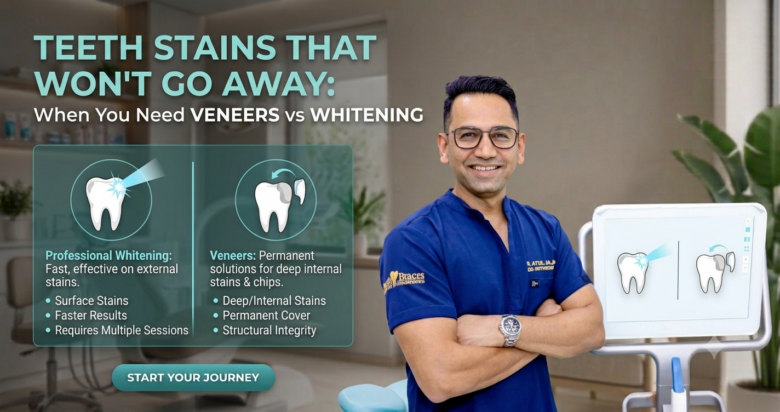
Teeth Stains That Won’t Go Away: When You Need Veneers vs Whitening
A bright smile is often associated with healthy-looking teeth, but teeth naturally vary in colour. Some people have slightly warmer or darker shades from birth, while others notice their teeth becoming stained over time. Coffee, tea, tobacco, certain foods and aging can all change the appearance of teeth.
The confusing part begins when brushing, whitening toothpaste or even professional whitening does not seem to make much difference. If you have tried to improve your smile and still notice yellow, brown or grey areas, the issue may be deeper than surface staining.
Understanding the teeth stain causes is therefore more important than simply choosing the strongest whitening treatment. Some stains respond well to professional whitening, while others may require a different cosmetic approach. In cases of severe teeth discoloration treatment, veneers may be considered when the natural tooth colour cannot be changed sufficiently through whitening alone.
So, how do you know which option is right for you? The answer depends on what is causing the discolouration, where the stain is located and what condition your teeth are in.
Why Do Some Teeth Stains Refuse to Budge?
Not all stains sit on the outer surface of your teeth. This distinction is one of the first things a dentist considers when assessing stubborn teeth stains.
Surface or extrinsic stains develop on the outer enamel. Coffee, tea, red wine, coloured foods and tobacco are common contributors. These stains may often respond to professional cleaning and whitening, depending on how deeply they have accumulated.
Intrinsic stains are different. They develop within the tooth structure and can be caused by factors such as certain medications during tooth development, dental trauma, excessive fluoride exposure or changes associated with aging. These are often described as intrinsic staining teeth, and conventional whitening may have limited ability to alter them.
This is why identifying the teeth stain causes is essential before deciding on treatment. Treating every type of discolouration with whitening can lead to disappointment when the underlying issue is not a surface stain.
Surface Stains vs Intrinsic Discolouration
The difference between external and internal staining can seem small, but it can completely change the recommended treatment.
Extrinsic staining affects the enamel surface and may improve considerably after professional cleaning or whitening. The results depend on the original shade of the teeth and how established the staining has become.
With intrinsic staining teeth, the colour change is located within the tooth rather than simply sitting on its surface. Some intrinsic discolouration can still respond to whitening, but the improvement may be limited or uneven.
For patients with stubborn teeth stains, a dental examination helps establish whether whitening is likely to provide the desired improvement. This assessment becomes particularly important when considering severe teeth discoloration treatment, as the aim should be to choose a treatment based on the cause rather than simply increasing the strength or frequency of whitening.
When Is Professional Teeth Whitening Enough?
Professional whitening can be an effective option when the main concern is tooth discolouration that responds to bleaching agents.
Unlike whitening toothpastes, which primarily help remove some surface staining, professional whitening is designed to lighten the natural colour of teeth. It can be useful for people whose teeth have become darker due to ageing, dietary habits or certain types of surface staining.
However, whitening does not change the colour of fillings, crowns or veneers. It also cannot correct every form of intrinsic discolouration.
This is why severe teeth discoloration treatment should begin with an assessment rather than assuming that a stronger whitening procedure will solve the problem. If the tooth colour is unlikely to respond adequately, another cosmetic option may offer a more predictable aesthetic improvement.
When Whitening May Not Give You the Result You Want
One of the most common frustrations with stubborn teeth stains is expecting whitening to work equally well on every type of discoloration.
If the underlying colour is particularly dark, whitening may produce some improvement without achieving the shade you hoped for. Certain forms of intrinsic staining teeth can also be resistant to conventional whitening.
Discolouration caused by dental trauma can sometimes affect an individual tooth differently from the surrounding teeth. Similarly, teeth affected by developmental changes may have colour patterns that are difficult to correct through whitening alone.
In these situations, continuing to repeat whitening treatments may not be the most sensible approach. Understanding the teeth stain causes allows your dentist to determine whether another treatment would be more appropriate.
Where Do Veneers Fit In?
A veneer is a thin layer of material placed over the front surface of a tooth to improve its appearance. A porcelain veneer can be used to address selected concerns involving colour, shape, size or minor aesthetic irregularities.
Unlike whitening, which works by lightening the natural tooth structure, veneers can mask the underlying colour of the tooth. This makes them an option worth discussing when severe teeth discoloration treatment is needed and whitening alone is unlikely to produce the desired result.
Veneers are not automatically the better choice, though. They involve preparation of the tooth in many cases, require careful planning and need to be maintained over time. They should therefore be considered only after understanding the condition of the teeth and the alternatives available.
The decision should be based on whether the benefits of a veneer justify the treatment for that particular tooth.
Veneers vs Whitening: Which One Should You Choose?
There is no universal answer because the two treatments solve different problems.
Whitening is generally more suitable when your natural teeth are healthy and the discolouration is likely to respond to bleaching. It preserves the natural tooth structure and can brighten several teeth at once.
Veneers may be considered when the colour change is resistant to whitening, particularly when there are also concerns about tooth shape, size or minor surface imperfections. A porcelain veneer can alter the visible appearance of an individual tooth or several teeth while creating a more consistent shade.
For someone dealing with severe teeth discoloration treatment, the choice therefore depends on whether the natural tooth can be predictably lightened or whether the discolouration needs to be masked.
A dentist should also consider how much healthy tooth structure is present, your bite, gum health, existing restorations and your expectations before recommending either option.
What About Teeth That Are Grey, Brown or Unevenly Coloured?
The colour of a stain can sometimes provide clues, but it is not enough to diagnose its cause.
Yellowing is commonly associated with aging and changes in enamel, while brown or darker stains can be related to dietary habits, tobacco or other external factors. A grey appearance can have several possible causes, including internal changes within the tooth.
This is why teeth stain causes should be investigated rather than relying on colour alone. A single darkened tooth, for example, may need a different assessment from general yellowing across the smile.
For intrinsic staining teeth, the treatment may also depend on whether the discolouration affects one tooth or several. Where stubborn teeth stains are localised, the treatment plan can be very different from a patient whose entire smile has gradually darkened.
Can Veneers Make Your Smile Look More Even?
One advantage of veneers is that they can address more than colour. When appropriately planned, they can also improve the visual proportions of teeth and create greater consistency across the smile.
This is where smile design can be useful. Rather than selecting a shade in isolation, the dentist can consider the relationship between tooth colour, shape, size, gum display and facial features.
This does not mean every patient with discolouration needs a veneer or a complete smile makeover. In cosmetic dentistry, conservative treatment is generally preferred where it can achieve the desired result while preserving healthy tooth structure.
If whitening can provide a satisfactory outcome, there may be little reason to consider veneers. If it cannot address the underlying colour adequately, however, veneers may become a more suitable option.
Why a Dental Examination Comes Before Treatment
Before deciding on severe teeth discoloration treatment, your dentist should establish why the teeth have changed colour in the first place.
The examination may include checking for decay, enamel wear, gum problems, old restorations and signs of trauma. This is important because discolouration can occasionally indicate an underlying dental issue that should be addressed before cosmetic treatment.
Your dentist will also consider whether the teeth are suitable for whitening or veneers and whether you have realistic expectations about the result.
This is particularly important with stubborn teeth stains. A treatment may improve the appearance considerably, but the extent of improvement depends on the underlying condition of the tooth.
Good cosmetic treatment planning starts with healthy foundations.
What If You Have Existing Fillings or Dental Work?
Existing dental restorations can complicate whitening because materials such as composite fillings, crowns and existing veneers do not respond to bleaching in the same way as natural teeth.
If you whiten your natural teeth while having visible restorations, you may notice a difference in shade afterwards. In some cases, existing restorations may need to be replaced to match the new tooth colour.
This is another reason why severe teeth discoloration treatment should be planned rather than approached as a standalone whitening procedure.
If veneers are being considered, the dentist can assess the existing restorations and determine how they fit into the overall treatment plan. The goal should be a consistent, natural-looking result without unnecessary procedures.
How Long Do the Results Last?
Neither whitening nor veneers should be viewed as a permanent solution that requires no maintenance.
Whitening results can gradually fade as teeth are exposed to foods, drinks and habits that contribute to staining. Maintaining good oral hygiene and limiting frequent exposure to heavily pigmented foods and drinks can help preserve the brightness.
Veneers can also last for many years with appropriate care, but they are not indestructible. Good brushing, flossing, regular dental check-ups and avoiding habits such as biting hard objects are important for protecting them.
If you have intrinsic staining teeth, understanding the reason for the discolouration is also important for maintaining your result. A personalised maintenance plan can help you understand what your teeth are likely to need over time.
When Should You Consider Veneers Instead of Whitening?
If your teeth are healthy but remain significantly discoloured despite appropriate whitening, veneers may be worth discussing. They can be particularly useful when colour is accompanied by concerns about shape, size or minor aesthetic imperfections.
However, severe teeth discoloration treatment does not automatically mean veneers. In some cases, alternative whitening approaches or other conservative cosmetic treatments may be sufficient.
The right choice depends on your teeth, your goals and how much change you actually need. An experienced cosmetic dentist should explain the benefits, limitations, longevity and maintenance requirements of each option before treatment begins.
The Right Treatment Starts With Understanding the Stain
When stubborn teeth stains refuse to disappear, reaching immediately for another whitening product may not solve the real problem. The key is understanding whether the discolouration is on the surface, within the tooth or related to another dental concern.
For some people, professional whitening can provide the improvement they want. For others, particularly those with certain forms of intrinsic staining teeth, veneers may offer a more predictable way to change the visible colour and appearance of the smile.
At Teeth & Braces by Dr Atul Jajoo, cosmetic treatment is approached alongside the health, structure, alignment and function of the teeth. With extensive experience in orthodontics and cosmetic dentistry, Dr Atul Jajoo takes a detailed approach to assessing discoloration and discussing treatment options suited to the individual.
If you are looking for severe teeth discoloration treatment and are unsure whether whitening, a porcelain veneer or another approach would be right for you, book a consultation with Dr Atul Jajoo in Indore. Understanding the cause of your discolouration is the first step towards choosing a treatment that gives you a healthier, more natural-looking and confident smile.
FAQs:
Q1. Can all types of teeth stains be removed with whitening?
No, whitening works best on certain types of surface and natural tooth discolouration. Some intrinsic stains may respond poorly, making alternative cosmetic treatments worth considering.
Q2. Are veneers better than whitening for severe discolouration?
It depends on the cause and severity of the discolouration. Veneers can mask colour that may not respond sufficiently to whitening, but they are not automatically the best option for every patient.
Q3. Can a porcelain veneer cover a dark or discoloured tooth?
Yes, a porcelain veneer can sometimes mask significant tooth discolouration and improve its visible appearance. Suitability depends on the condition of the tooth, the amount of healthy structure and your overall dental health.
Q4. How do I know whether my stains are surface or intrinsic?
A dentist can examine the teeth and consider your dental history, staining pattern and overall oral health. This helps determine the likely cause and whether whitening or another treatment is more appropriate.